
Approach
Leadership only works when it fits its context
FNDRY. connects strategy, leadership behaviour and organisational systems through contextual diagnostics and integrated leadership system design.
Context model
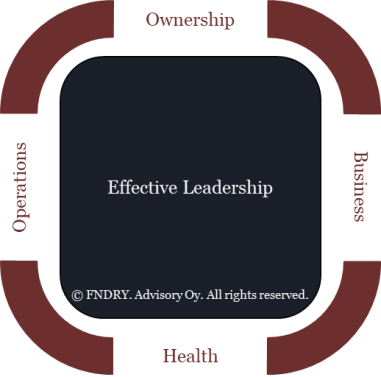
The FNDRY. leadership context model
Four contextual dimensions shape what leadership must look like in any organisation. Misreading them leads to the wrong leaders and the wrong expectations.
-
Ownership and strategy
Public, PE, founder or family ownership each create different time horizons, stakeholder pressures and governance demands. -
Business fundamentals and scope
Scale, complexity, industry and geographic reach determine whether leadership must be hands on builder, portfolio orchestrator or both. -
Organisational health and outlook
Stable, transforming or distressed organisations require different leadership focus and cadence. -
Operational capabilities and dynamics
Mature engines versus systems under build, stable versus volatile environments, efficiency versus innovation emphasis.
System levels
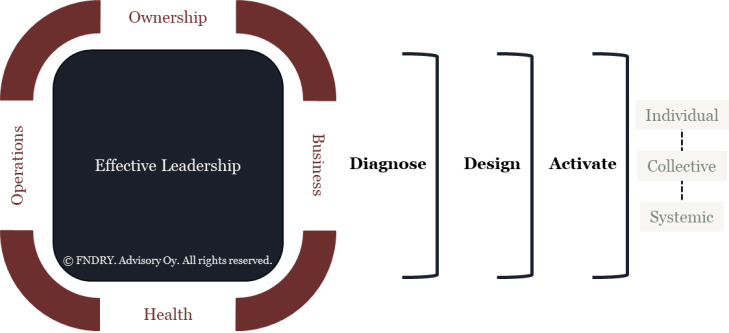
Individual, collective and systemic
FNDRY. works across three levels at once. This is where many traditional leadership projects fail, because they focus narrowly on individuals or generic training.
-
Individual
We assess the capability, behavior, decision-making quality, and contextual fit of your key leaders. -
Collective
We evaluate and improve the alignment, coherence, and decision rhythm of your leadership team. -
Systemic
We diagnose how your structures, processes, incentives, and culture either reinforce or undermine effective leadership.
Flow
From diagnosis to activation
We connect diagnostics, design, activation, and advisory into one integrated flow. Clients can enter at different points, but we achieve lasting impact when we address the full chain of leadership system elements.
1
Diagnose
Executive, team and system diagnostics to make the leadership context explicit.
2
Design
Succession, talent strategy, assessment and leadership frameworks built to fit the context.
3
Activate
Workshops and operating rhythm that turn strategy into concrete leadership behaviour.
4
Advisory
Retainer and embedded execution where system level change requires hands on support.